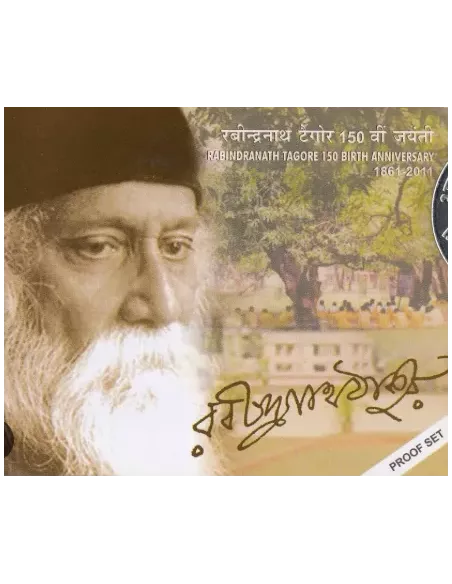
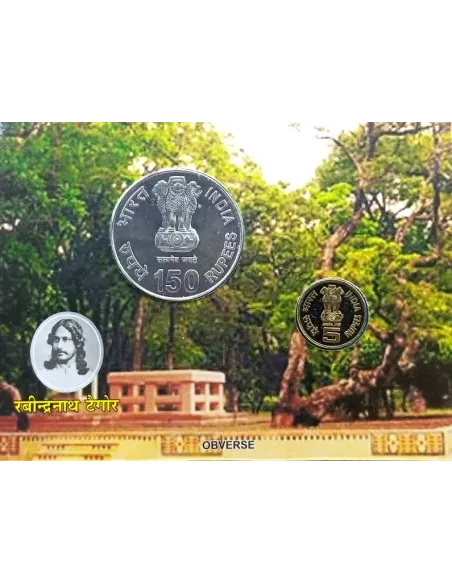
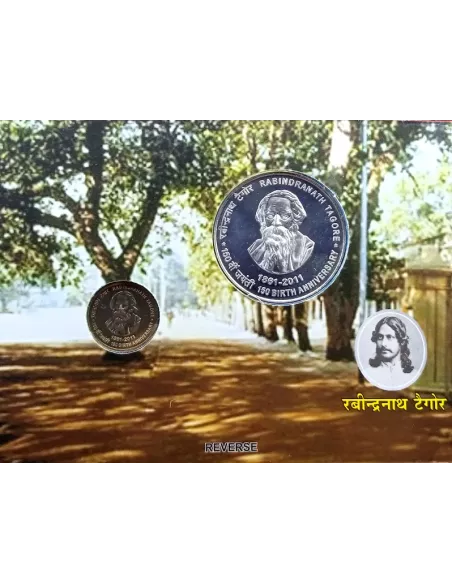
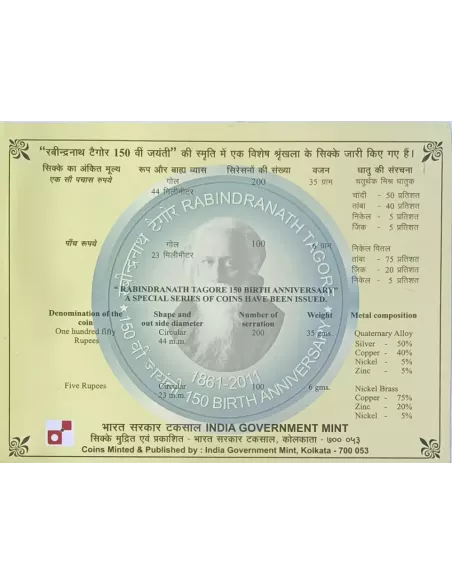
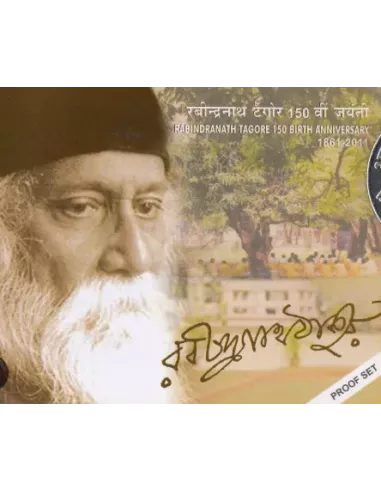
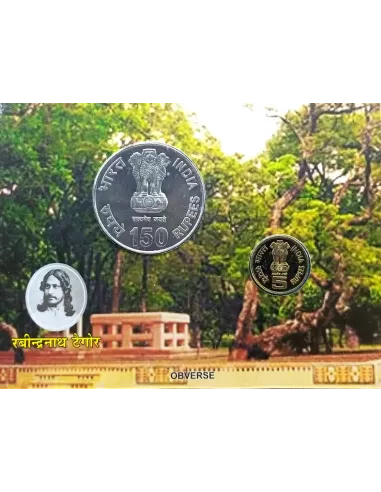
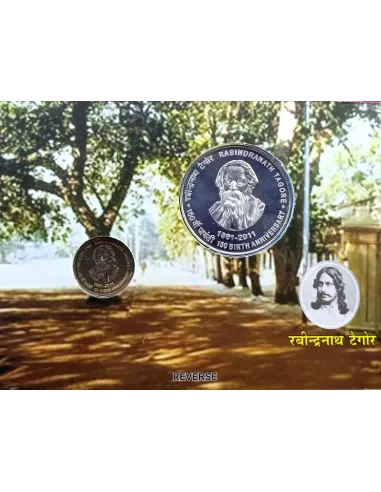
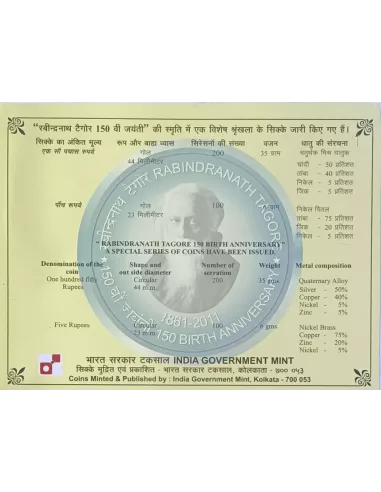
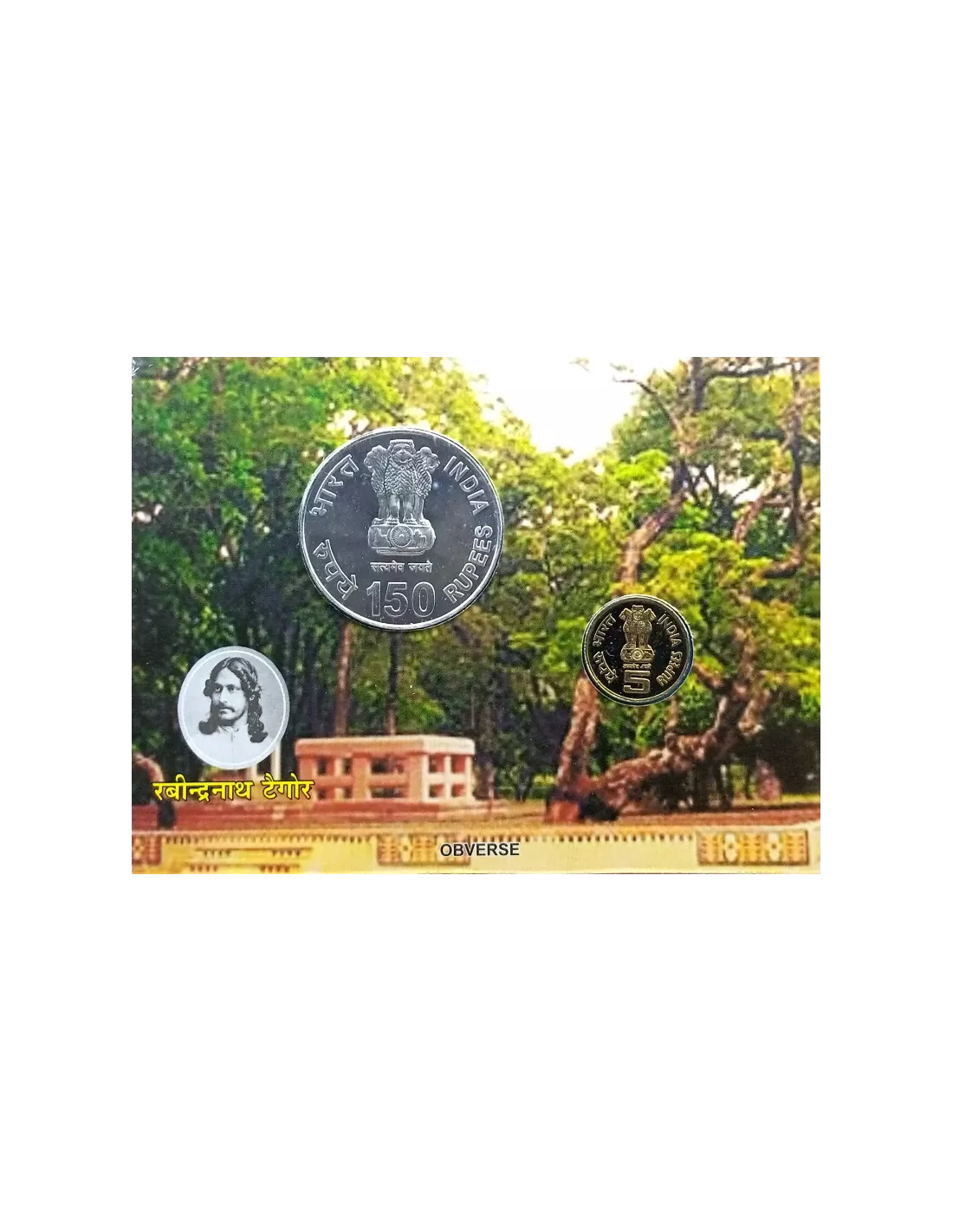
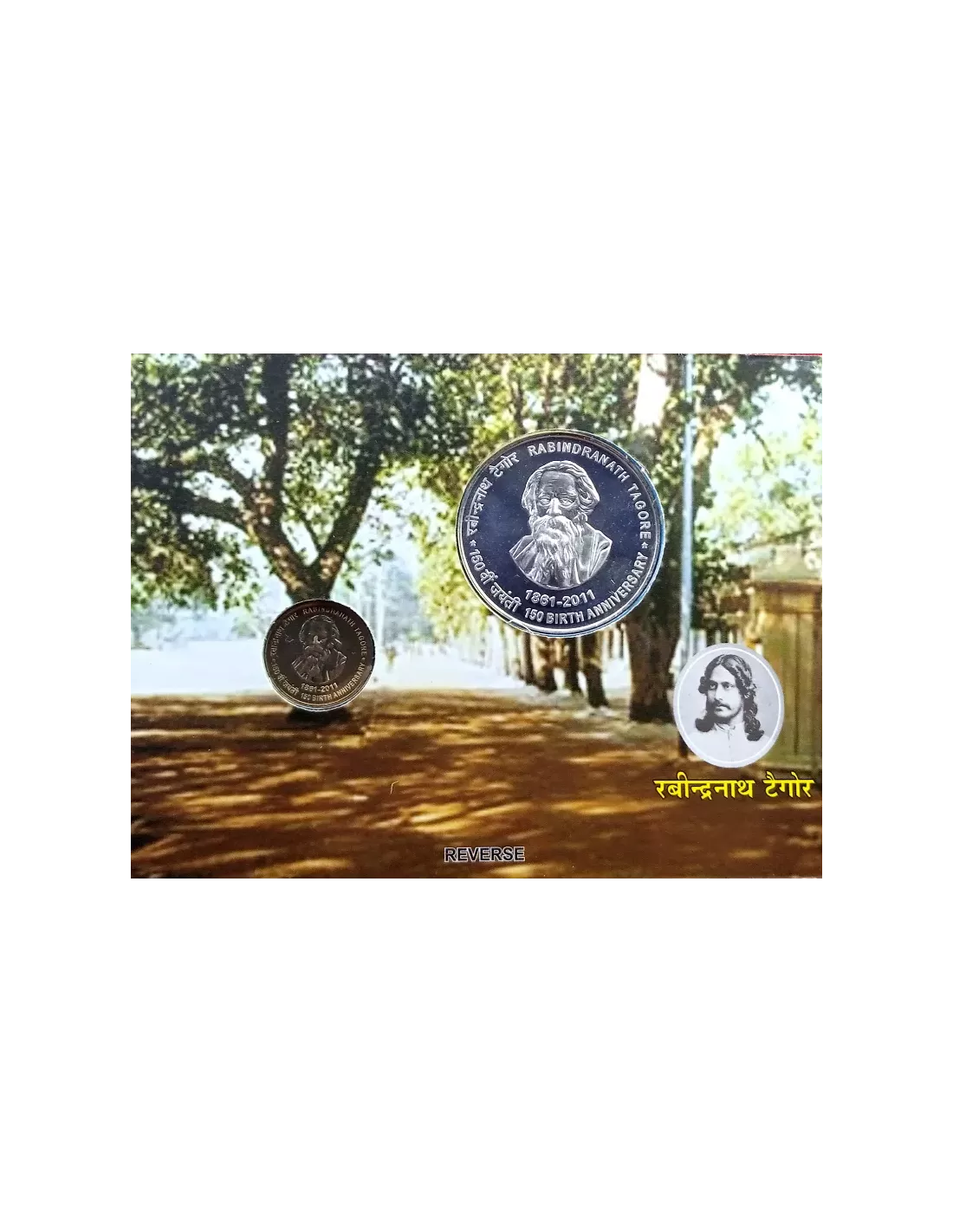
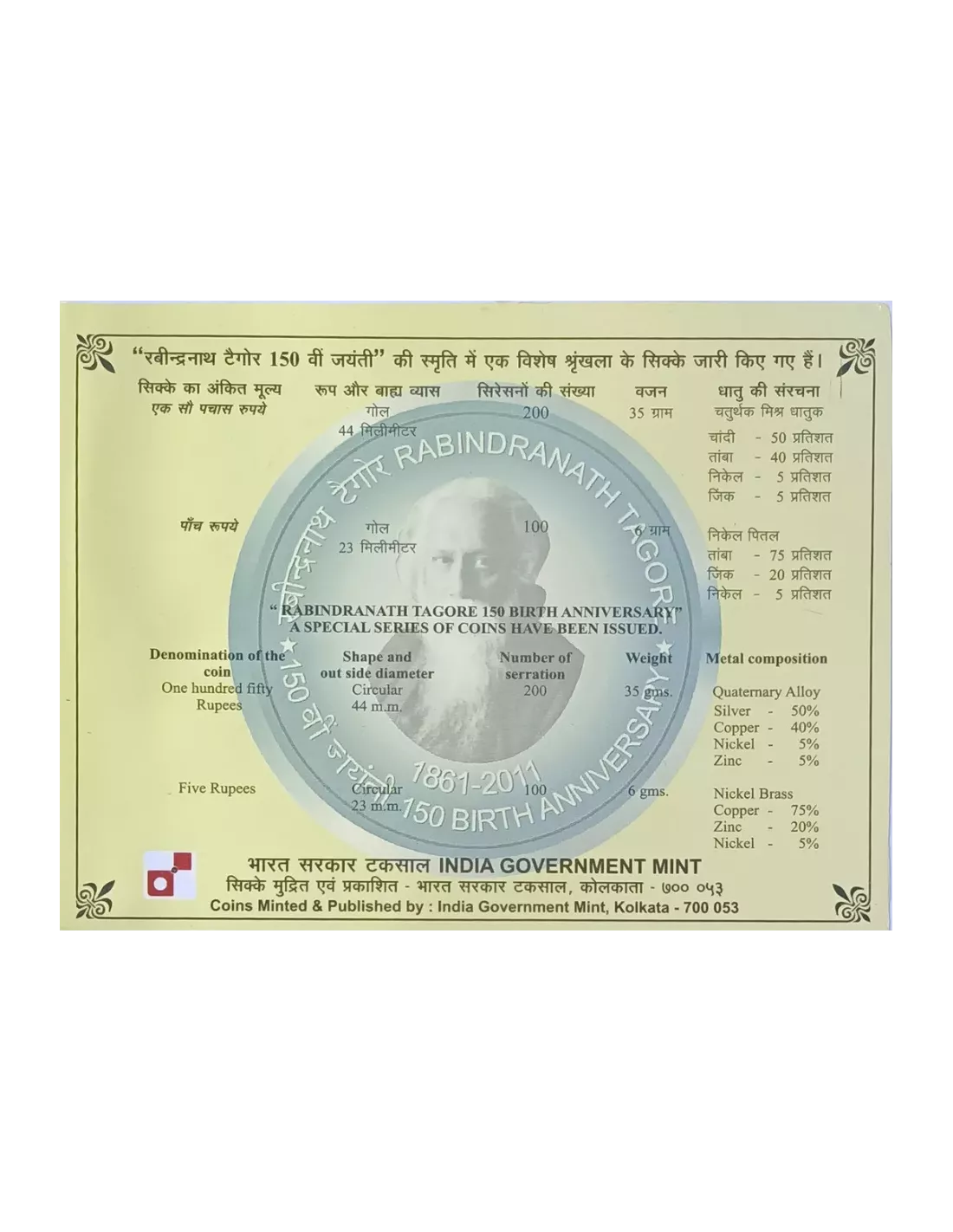
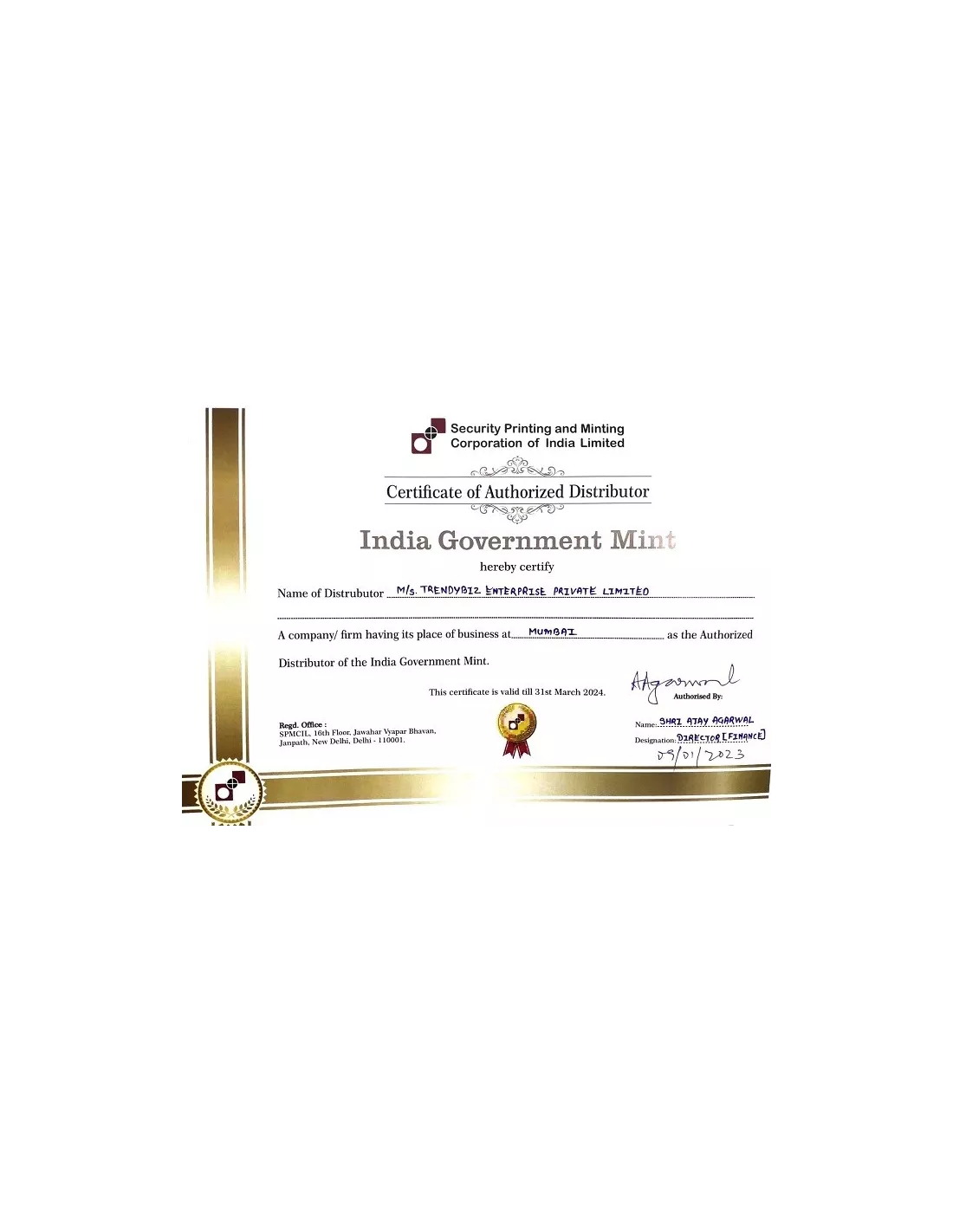
150 Rupees India Govt. Mint 150th Birth Anniversary Of Rabindranath Tagore Commemorative Coin (Rs.150 Coin)
Commemorative Coins :
manufacturing circulation coins. These coins are issued to commemorate events of historical
and social importance and to celebrate various accomplishments of public and private
organizations. India Government Mint, Mumbai has been releasing commemorative coins since
1964. The commemorative coins issued by the Mint are of very high quality and have a great
demand among coin collectors and numismatists.
Commemorative coins are of two types
Proof Coins
Uncirculated Coins
Proof Coins:
Proof coins are the high quality commemorative coins which have a frozen effect on the surface
design of the coin with a mirror finish. These coins are marked with the symbol 'M' to indicate
that they are manufactured at Mumbai Mint. These coins are sold at a premium price as they
are manufactured with high quality standards and have high numismatic value.
Uncirculated Coins:
Uncirculated coins are the high quality commemorative coins which have mirror finish on the
surface but without any frozen effect on the design. These coins are marked with a diamond
symbol to indicate they are stamped at Mumbai Mint. The uncirculated coins are also sold at
premium but they are priced a little lower than the proof coins.
History
In 1964 production of commemorative coins was started. The first commemorative coin was in the memory of Pandit Jawaharlal Nehru.
Theme Description
The Gurudev of the Globe Lovingly referred to as Gurudev, Rabindranath Tagore was born on 7th May 1861 to a Pirali Brahmin family at Kolkata. Tagore showed his mastery in literature as an eight year old boy by writing poetry. Tagore becomes a novelist, poet, musician, artist, social reformer and central figure in the Indian modernist movement. From time to time, he participated in the Indian nationalist movement, though in his own non-sentimental and visionary way. Tagore was knighted by the ruling British Government in 1915, but within a few years he resigned the honour as a protest against British policies in India. In 1901 Tagore founded an experimental school in rural West Bengal at Shantiniketan (“Abode of Peace”), where he sought to blend the best in the Indian and Western traditions. This school later rose in prominence as Visva-Bharati University in 1921.Tagore took up painting and produced works that won him a place among India’s foremost contemporary artists. Apart from being the author of internationally celebrated verses in Gitanjali, he became the first non-European Nobel laureate by earning the 1913 prize in Literature. At home, he composed national anthem of the Republic of India’s Jana Gana Mana….However, he passed away before the independence of India on 7th August 1941.